
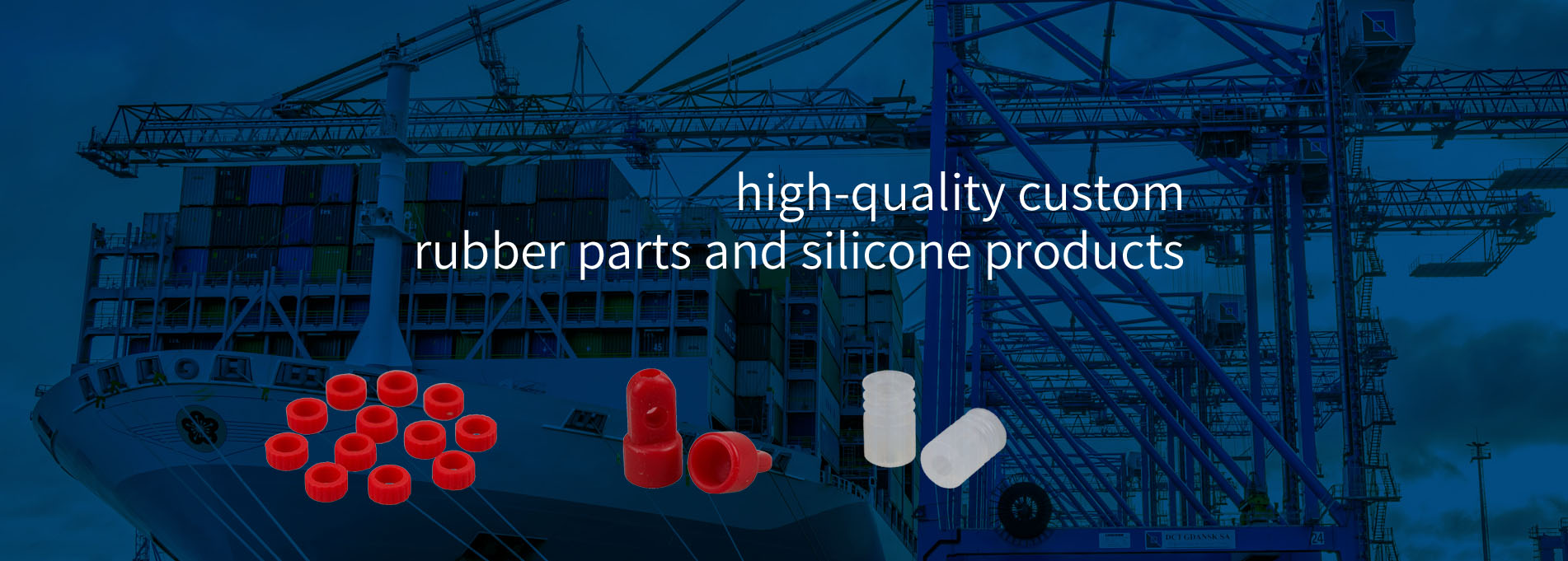
The cost difference between a custom NBR, EPDM, FKM (Viton), or Silicone rubber part made in Ohio or Bavaria versus one produced in Ningbo or Guangdong is not just about cheap labor. It is rooted in raw material supply chain density, tooling efficiency, and compounding economics.

1. Tooling and Mold Amortization (65% to 75% Lower)
Custom rubber products—whether custom-molded O-rings, lip seals, or metal-to-rubber bonded vibration dampers—require precision tooling.
European/US Toolmakers: A single-cavity prototype or short-run multi-cavity steel mold (P20 or 718H steel) typically costs between $5,000 and $15,000 with lead times of 6 to 10 weeks.
Chinese Toolmakers: The same tool, CNC-machined and EDM-finished to identical tolerances, costs $1,200 to $3,500 with a turnaround of 2 to 3 weeks.
For an SME introducing a new product line or running low-to-medium volumes (1,000 to 20,000 units per year), high Western tooling costs destroy project ROI before production even begins.
2. Piece-Price Manufacturing Costs (35% to 55% Lower)
When comparing unit prices for molded or extruded rubber components:
Compression and Injection Molding: Rubber compression molding machine hours and labor-intensive deflashing/trimming processes cost significantly less in China, yielding a 40% to 50% unit-price reduction on standard polymers like NBR, Neoprene, and EPDM.
High-Performance Elastomers: For specialized materials such as FKM (Fluorocarbon), Fluorosilicone, or Liquid Silicone Rubber (LSR), raw polymer processing and post-curing ovens run continuously at scale, allowing Chinese suppliers to quote 35% to 45% below Western counterparts.
3. Rubber Compound Formulation and Material Sourcing
China is the world's largest producer and consumer of synthetic rubber. Chinese exporters source virgin polymers, carbon black fillers, and vulcanization packages directly from large-scale domestic chemical complexes. Because domestic raw material supply chains are dense, Chinese rubber compounders do not face the steep distributor markups that small Western rubber molders incur when purchasing small batches of raw slabs.
The Landed Cost Reality: Tariffs, Freight, and True TCO
A common concern for Western purchasing managers is whether ocean freight, duty fees, and import tariffs erode these initial savings.
When calculated on a Total Cost of Ownership (TCO) basis for a typical order of custom rubber seals or anti-vibration mounts:
Factory Gate Price (Ex-Works): Chinese price is 50% lower than Western domestic price.
Freight & Duty (Sea Freight + 3% to 25% Tariffs): Adds roughly 10% to 18% to the unit cost.
Final Landed Cost at Your Warehouse: You still retain a 32% to 42% net cost advantage over purchasing locally.

For B2B distributors and traders, a 35%+ reduction in Cost of Goods Sold (COGS) instantly doubles gross operating margins or provides the pricing flexibility needed to undercut local competitors while maintaining healthy profitability.
Technical Parity: Quality, ASTM Standards, and Compliance
The price advantage does not require sacrificing engineering rigor. Leading export-focused Chinese rubber manufacturers operate under strict international quality frameworks:
International Certifications: Full compliance with ISO 9001 for general industrial products and IATF 16949 for automotive-grade sealing and damping systems.
Material Standardization: Formulations tested against ASTM D2000 specification systems, ensuring precise durometer (Hardness Shore A/D), tensile strength, elongation at break, compression set, and fluid/heat resistance.
Regulatory Compliance: Full documentation for REACH, RoHS, FDA 21 CFR (for food-grade silicone/EPDM), and 3-A / NSF certifications where required.
The Strategic Procurement Takeaway
While local Western manufacturers remain ideal for emergency 48-hour prototype turnarounds or ultra-low volume replacements, they cannot compete on price or scale for ongoing production runs.
By partnering directly with a certified Chinese rubber manufacturer, Western SMEs and trade partners unlock 35% to 50% unit savings and over 60% tooling savings—allowing you to reinvest capital into business expansion, product development, and market growth.
Ready to Optimize Your Rubber Supply Chain and Reduce COGS?
Whether you need high-precision custom rubber seals, complex anti-vibration mounts, or reverse-engineered OEM parts, our engineering team is ready to support your project from blueprint to volume production.
Contact us today for a fast quote or a free technical DFM (Design for Manufacturability) review:
Email: mark@lifengind.com
WhatsApp/Phone: +86-15858396992
Factory Location: near Shanghai port, China
Send us your STEP/DWG files or material specifications—we typically return detailed quotes within 24 hours.